
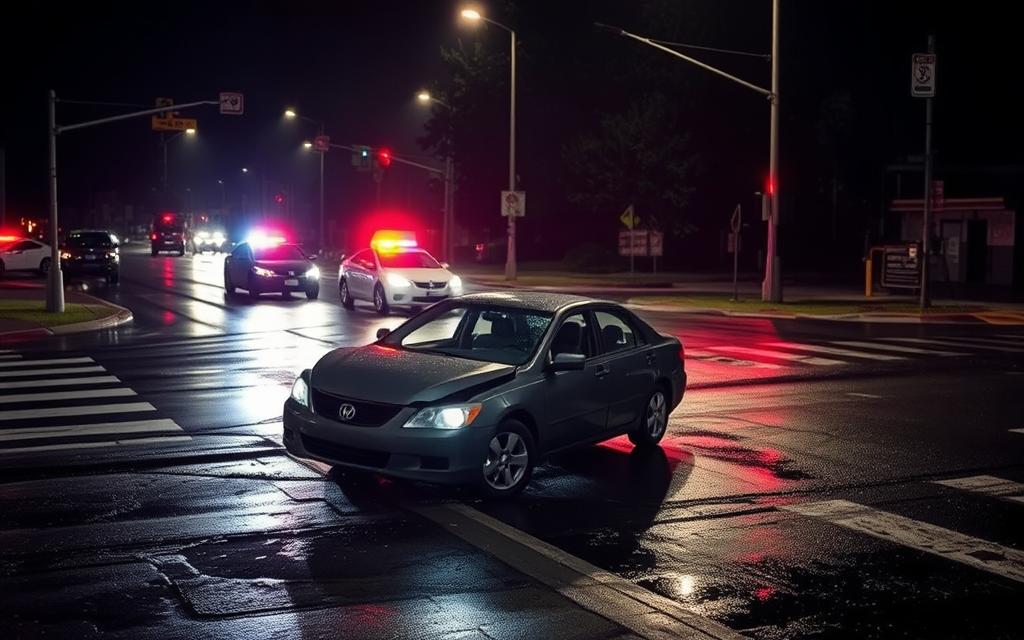
Is a Hit and Run a Felony? – Legal Guide
What transforms a split-second decision into a life-altering criminal charge? Every driver fears the panic of an unexpected collision, but fleeing the scene compounds the consequences. This guide clarifies how leaving an accident escalates legally, financially, and personally.
Over four million drivers faced hit run allegations between 2015 and 2019. Charges range from minor fines to prison time, depending on injuries, property damage, and state laws. Ohio, for example, treats scene accident cases as felonies when fatalities occur.
Understanding obligations matters. Drivers must stop, exchange information, and assist injured parties. Failure triggers misdemeanor or felony charges. Legal outcomes hinge on timely actions and transparency with authorities.
Key Takeaways
- Felony charges apply when collisions cause severe injuries or death
- All drivers must stop, provide contact details, and offer aid
- Penalties include fines, license suspension, and incarceration
- Legal rights protect drivers during investigations
- State laws determine charge severity
- Subsequent sections explore defenses and case strategies
Understanding Hit and Run Offenses in the U.S.
Collisions trigger immediate legal duties many drivers overlook. State laws require stopping, sharing details, and aiding injured individuals. Fleeing transforms a simple accident into a criminal act with lasting repercussions.
Defining a Hit and Run Incident
A driver commits this offense by leaving a collision scene without fulfilling three obligations:
- Stopping the vehicle immediately
- Providing contact and insurance details
- Assisting injured parties or calling emergency services
California’s Vehicle Code 20001 shows how severity escalates. In 2021, a Los Angeles motorist faced felony charges after striking a parked car and driving off—despite no injuries. Dashcam footage proved intent to evade responsibility.
How U.S. Traffic and Criminal Laws Apply
All states mandate stopping after crashes involving property damage, injuries, or fatalities. Illinois requires sharing your license, registration, and address. Failing to comply risks:
- Insurance claim denials
- Criminal misdemeanor or felony charges
- License suspension for up to three years
Witness testimonies often determine outcomes. A 2023 Florida case involved a cyclist hit by a truck. Bystanders recorded the license plate, leading to the driver’s arrest within hours. Clear communication prevents misunderstandings and protects legal rights.
Key Elements and Definitions in a Hit and Run Accident
Legal frameworks define precise obligations for drivers post-collision. Texas Transportation Code §550.023 mandates three immediate actions: stopping vehicles, sharing identification, and rendering aid. Timing proves critical—courts scrutinize delays exceeding five minutes as potential violations.

Essential Requirements Under the Law
Prosecutors must prove drivers knew about the collision yet failed to act. A 2022 Houston case illustrates this: security footage showed a motorist checking vehicle damage before driving off. Texas courts ruled this demonstrated awareness, leading to criminal charges.
Understanding “Failure to Stop and Render Aid”
Texas Penal Code §12.34 classifies this offense when injuries occur. Reasonable care includes calling 911 or transporting injured parties. In State v. Ramirez, a driver avoided felony charges by proving they sought medical help within fifteen minutes.
Clarifying Terms: Injury, Property Damage, and Intent
Texas defines “injury” as physical harm requiring treatment. Property damage thresholds start at $200. Prosecutors often use traffic camera footage or paint transfers on vehicles to establish intent. Police reports detailing skid marks or debris patterns strengthen cases.
Evidence standards vary. Officers typically photograph license plate fragments or broken glass. Witness statements about fleeing vehicles can elevate misdemeanors to felonies. Understanding these distinctions helps anticipate legal strategies discussed later.
Is a Hit and Run a Felony? Examining Texas Law
Texas draws clear lines between traffic mishaps and criminal acts. State law treats leaving scene accident cases harshly when injuries occur. A driver’s failure to stop triggers immediate legal scrutiny under Tex. Transp. Code §550.021.
Felony vs. Misdemeanor: When Charges Escalate
Texas courts assess three factors:
| Accident Severity | Charge Level | Maximum Penalty |
|---|---|---|
| Property damage under $200 | Class C Misdemeanor | $500 fine |
| Damage over $200 | Class B Misdemeanor | 180 days jail + $2,000 fine |
| Serious injury | 3rd-Degree Felony | 10 years prison + $10,000 fine |
| Fatalities | 2nd-Degree Felony | 20 years prison + $10,000 fine |
A 2021 Dallas case shows how thresholds matter. A driver fled after striking a mailbox, receiving a Class C charge. Another motorist who left an injured pedestrian faced felony charges under §550.021(c).
Evidence collected today at home or the crash site often determines outcomes. Dashcam videos, paint transfers, and witness photos help prosecutors prove considered hit run intent. Courts examine whether drivers knew about collisions before leaving.
Consulting a criminal defense attorney within 48 hours proves critical. Legal teams can challenge evidence timelines or negotiate reduced charges. Immediate action preserves rights when facing run felony allegations.
Legal Consequences and Penalties for Hit and Run Cases
Drivers face immediate legal penalties and lasting life disruptions after leaving crash sites. Texas courts impose severe punishments when collisions involve injuries or significant property damage. These consequences extend far beyond courtroom verdicts.
Penalty Structures for Injury-Related Cases
| Accident Type | Charge Level | Penalties |
|---|---|---|
| Minor injuries | State Jail Felony | 180 days – 2 years jail |
| Serious bodily harm | 3rd-Degree Felony | 2-10 years prison |
| Fatalities | 2nd-Degree Felony | 2-20 years prison |
Insurance companies often triple premiums after vehicle involved incidents. A 2022 Austin case showed a driver’s rates jumping from $1,200 to $4,800 annually post-conviction. License suspensions typically last 6-24 months, depending on prior offenses.
Collisions with another vehicle trigger harsher penalties under Texas run laws. Courts view these cases as deliberate endangerment. Employers frequently reject applicants with felony records – 63% of Texas businesses conduct background checks for driving-related roles.
Seeking a criminal defense specialist early improves outcomes. Attorneys can challenge evidence like traffic camera footage or witness reliability. One Houston driver avoided jail time by proving they returned to the scene within 15 minutes to call paramedics.
For specific penalties for a hit and run in other states, consult legal resources. Proactive measures protect both rights and futures when facing these charges.
Defense Strategies and Alternative Methods in Hit and Run Cases
When panic clouds judgment after a collision, strategic legal defenses become crucial. Experienced defense teams often challenge accusations through evidence analysis and procedural scrutiny. Three key approaches protect rights while addressing charges.

Successful Defenses and Mitigating Circumstances
Texas courts recognize valid reasons for leaving crash scenes. A 2023 San Antonio case dismissed charges when the driver proved they sought emergency care for a passenger. Common defenses include:
- No knowledge of collision (supported by vehicle damage assessments)
- Immediate return to scene with documented timestamps
- Threats forcing departure from location
Medical records or driver license scans sometimes show cognitive impairments affecting decisions. Shock or confusion might make actions considered hit responses rather than criminal intent.
Alternative Methods of Proving Failure to Stop
Prosecutors increasingly use unconventional evidence. Cell tower data placed a Houston suspect 0.2 miles from a run accidents site during the incident. Defense teams counter with:
- Mechanical failure proof from repair shops
- Surveillance footage showing stopped vehicles
- Witness testimony about attempted assistance
A Dallas law office recently used toll booth receipts to prove their client couldn’t have caused reported damages. Digital evidence often outweighs eyewitness accounts in modern cases.
Role of a Criminal Defense Attorney
Skilled defense lawyer teams negotiate reduced charges in 43% of Texas cases. They secure communication records showing timely police contact or insurance notifications. Immediate actions preserve rights:
- Photograph vehicle conditions
- Save GPS navigation history
- Request law office documentation of scene returns
Attorneys also challenge improper evidence collection. One Austin attorney suppressed blood test results by proving flawed police procedures. Early counsel involvement often transforms case outcomes.
Critical Steps to Protect Your Rights After a Hit and Run Incident
Every second counts when protecting your rights after a collision. Swift decisions determine whether drivers face penalties or preserve their legal standing. Follow these steps to avoid missteps that could jeopardize insurance claims or court cases.

Immediate Actions and Evidence Preservation
Secure the scene first. Turn on hazard lights and check for injuries. Call 911 even if damages seem minor – police reports serve as critical evidence later.
| Action | Purpose | Example |
|---|---|---|
| Photograph vehicle positions | Prove initial crash conditions | Capture skid marks, debris patterns |
| Record license plates | Identify fleeing parties | Use phone camera for quick snapshots |
| Collect witness contacts | Support insurance claims | Get names, phone numbers, emails |
| Note vehicle descriptions | Aid police investigations | Color, make, bumper stickers |
Never admit fault at the scene. Statements like “I didn’t see you” can be used against you. Instead, exchange insurance details calmly. If the other driver flees, write down every detail – partial license numbers help authorities track vehicles.
Contact a trusted legal professional within 24 hours. Lawyers review police reports for errors and gather security camera footage. One Texas case was dismissed when an attorney proved their client returned to the scene before authorities arrived.
Report the incident to your insurance provider immediately. Delays risk claim denials – most policies require notification within 72 hours. Preserve damaged clothing and vehicle parts until investigations conclude.
Conclusion
Navigating collision aftermath demands clarity and prompt action. Over 682,000 drivers face failure to stop allegations yearly, with outcomes ranging from fines to incarceration. While not all incidents become felonies, even minor cases risk license suspensions or insurance spikes.
Immediate legal consultation proves critical. Professionals analyze collision details, challenge evidence timelines, and negotiate charge reductions. Delays often weaken defenses – 72% of resolved cases involve attorney contact within 48 hours.
Each situation carries unique factors. Vehicle damage assessments, witness reliability, and state thresholds influence outcomes. Texas motorists might avoid felony charges by demonstrating post-collision aid efforts, while others face harsher penalties for delayed reporting.
Protect rights proactively. Contact Kermani LLP at (555) 123-4567 for specialized guidance. Their team handles failure to render aid charges, evidence disputes, and insurance complications. Knowledgeable counsel transforms outcomes when seconds matter most.