
DUI Third Offense License Revocation: How To Navigate The Process
Are you facing a DUI third offense? Wondering if you’ll lose your driving rights forever? Navigating a license revocation is tough. It feels like a big legal puzzle with serious effects.
A third DUI offense is a big deal. The penalties are much harsher than before. It can affect your job and personal life a lot. Knowing how to deal with license revocation is key.
This guide will help you understand DUI third offense license revocation. You’ll learn about legal strategies and defense options. We’ll also talk about how to get your driving rights back.
Key Takeaways
- Third DUI offenses trigger severe legal consequences
- License revocation can dramatically impact personal mobility
- Legal representation is critical in navigating the process
- Rehabilitation programs might help mitigate penalties
- Understanding state-specific laws is essential
Understanding DUI Offenses and Their Consequences
Dealing with DUI laws can be tough, even for those with repeated offenses. The law gets stricter with each drunk driving violation. Each offense brings harsher penalties.
What Qualifies as a Third DUI Offense?
A third DUI offense means you’ve had several alcohol-related driving problems. Most places look at these things:
- Prior convictions in 5-10 years
- Blood Alcohol Content (BAC) over the limit
- Proven cases of driving while impaired
Legal Implications of Multiple DUIs
With more DUIs, the penalties get much worse. A third DUI can lead to:
- Mandatory jail time
- Big financial fines
- Longer license loss
- Possible felony charges
Every state has its own rules, but third-time offenders usually face serious punishment. These penalties can last a long time. They can hurt your job, insurance, and how others see you.
The License Revocation Process
Getting a third DUI means you face a tough process. It can really affect your right to drive. Knowing the legal steps and possible outcomes is key.
After a third DUI, the process starts right away. The police start it after they arrest you. There are important steps that decide what happens next.
Critical Steps in License Revocation
- Immediate license suspension upon arrest
- Formal notification from Department of Motor Vehicles
- Potential temporary driving permit issuance
- Administrative hearing request window
- Official license revocation determination
Suspension Timeframe Considerations
The length of a license suspension changes a lot. In places like Texas, it can be from 90 days to 2 years. The exact time depends on:
- Blood alcohol concentration levels
- Prior DUI history
- Chemical test compliance
- State-specific regulations
Being in a Revoked License situation is hard. You need to deal with legal steps and find ways to get around. This might mean using public transport or carpooling.
Talking to lawyers and learning about the License Revocation process can help. It can lessen the impact on your driving rights and life.
State-Specific Laws and Differences
DUI laws vary a lot from state to state. It’s key for drivers to know these differences, as they can face losing their license. Each state has its own rules for DUI cases, making it hard for people with multiple offenses.
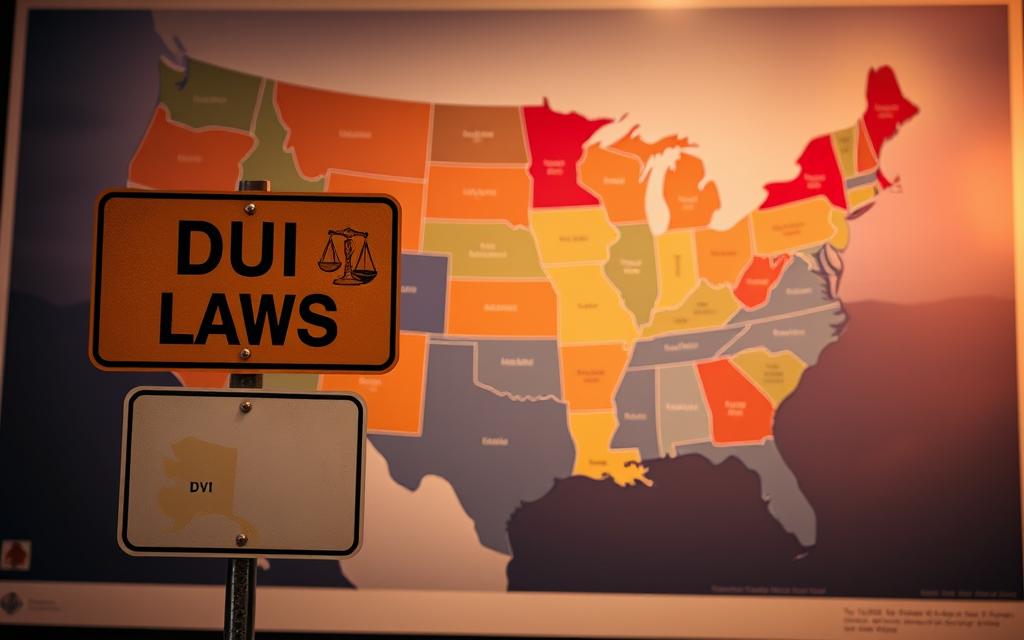
In New Jersey, DUI laws are very specific. Drivers need to understand that each state has its own way of dealing with DUI cases.
Variations in DUI Laws Across States
- Penalty severity ranges widely between states
- Blood alcohol concentration (BAC) thresholds differ
- Mandatory minimum sentences vary by jurisdiction
- Repeat offender classifications have distinct definitions
Some states are stricter with repeat offenders, while others are not. Knowing the laws in your area is very important.
License Reinstatement Procedures
| State | Typical Suspension Period | Reinstatement Requirements |
|---|---|---|
| New Jersey | 10 years | Mandatory driver education, fees, SR-22 insurance |
| California | 4 years | Alcohol treatment program, reinstatement fee |
| Florida | 5 years | Hardship license, mandatory counseling |
Drivers need to look up the rules for their state to get their license back. Getting legal advice early can really help.
The Impact of a Third Offense on Your Driving Record
A third DUI offense can change your life a lot. It’s not just about the law. It can affect your job and personal life a lot.
Getting caught for DUI three times can really hurt your driving record. It can make life hard in many ways.
Insurance Rate Implications
DUI penalties can change your insurance a lot. Drivers with DUIs often see:
- Insurance costs go way up
- Insurance companies might cancel your policy
- You might need special, expensive insurance
Insurance companies see DUIs as a big risk. Some might not cover you at all. This can lead to very high insurance costs.
Commercial Driving License Consequences
For people who drive for a living, a third DUI can end their career. Commercial driving licenses face big problems:
- Your license might get taken away right away
- You might lose your license forever
- You might not be able to work in the transportation field
Many companies that transport people or goods have strict rules about DUIs. Getting a job back can be very hard.
Dealing with these problems needs smart legal advice and hard work to fix your life and career.
Seeking Legal Representation

Facing a DUI third offense is very serious. It needs expert legal help. DUI laws get harder with each offense. A good lawyer is key to protect your rights and future.
Choosing the right lawyer is very important for DUI third offenses. A good lawyer knows DUI laws well. They can help lessen the bad outcomes.
Critical Qualities in a DUI Defense Attorney
Finding the best lawyer means looking at a few things:
- They must have lots of experience with multiple DUI offense cases.
- They need to know DUI laws very well.
- They should have a good track record of winning cases.
- They must know how to challenge evidence.
- They should be good at talking to prosecutors.
Evaluating Legal Representation
Your lawyer should know a lot about DUI third offenses. Look for someone who:
- Offers detailed first meetings.
- Is clear about how much they cost.
- Has shown they can lower charges.
- Tells you clearly about their plans for your case.
Getting a lawyer costs money, but it’s worth it. A good DUI lawyer can save your driving rights. They can also help you avoid jail and find the best defense for you.
Possible Defenses Against a Third DUI
Facing a third DUI charge can feel scary. But knowing possible legal defenses can give you hope. DUI Laws offer many strategies that lawyers might use to fight your case and protect your rights.

- Challenge the initial traffic stop’s legality
- Question the accuracy of chemical or field sobriety tests
- Examine possible mistakes during arrest
- Look into any equipment problems
- Review how the officer acted and what they wrote down
Common Legal Defenses for DUI Charges
Lawyers often look at technical issues that might make evidence not count. For example, they might check if the breathalyzer was set right, if tests were done correctly, and if your rights were respected. These can raise doubts about your guilt.
How Prior Offenses are Treated in Court
Courts take later DUIs more seriously. But, even with more offenses, a good lawyer can try to get penalties lowered. They look for reasons in DUI Laws that might help your case.
Handling a third DUI well needs a lot of legal knowledge and careful planning. It’s very important to talk to a skilled DUI defense lawyer. They can help you through these tough legal issues.
Reinstating Your License After a Third Offense
Getting your license back after a third DUI is hard. You need to follow many legal and administrative steps. Knowing these steps can help you get your driving rights back.
The journey to get your license back has many important steps. Drivers with a revoked license must prepare for a detailed process. This process includes financial, legal, and personal steps.
Essential Steps for License Reinstatement
- Complete mandatory suspension period
- Pay all outstanding court-related fines
- Submit proof of SR-22 insurance
- Attend required alcohol education programs
- Pass written and driving examinations
Documentation Requirements
| Document Type | Purpose |
|---|---|
| SR-22 Certificate | Proves financial responsibility |
| Completion Certificate | Verifies alcohol education program |
| Court Clearance | Confirms legal obligations fulfilled |
| Reinstatement Application | Official request to restore driving privileges |
Getting your license back takes time and effort. Each state has its own rules. It’s important to check with your local Department of Motor Vehicles.
Pro tip: Keep all your records in order. This will make the process easier.
Alternative Solutions to License Revocation
Dealing with DUI Penalties can be tough, when you can’t drive. People facing Driving Under Influence charges have ways to get around. They can find new ways to get where they need to go.
- Look into occupational driver’s licenses for important trips
- Think about getting an ignition interlock device
- Make a plan for how you’ll get around
Interlock Device Considerations
Ignition interlock devices might let you drive again. These systems stop your car if it finds alcohol. They help show you’re driving safely.
Using an interlock device has good points:
- You can drive a little bit
- It shows you’re serious about safe driving
- It might make your license suspension shorter
Public Transportation Strategies
Planning how to get around is key after DUI Penalties. Cities now have many ways to travel without a car:
- Public transit systems
- Rideshare services
- Carpooling networks
- Bicycle and electric scooter programs
Thinking ahead about how to get around helps. It lets you deal with DUI challenges and keep up with life and work.
The Role of Rehabilitation Programs
Facing a DUI third offense is tough. It can change your life. Rehabilitation programs help with the reasons behind drunk driving. They offer a way to get better.
By joining these programs, you can lessen DUI penalties. They help in many ways:
- Personal Growth: Find out why you drink too much
- Learn how to handle stress and triggers
- Fix your personal and work relationships
- Lower the chance of getting another DUI
Benefits of Attending Substance Abuse Programs
Substance abuse programs give support to those with DUIs. They include:
- One-on-one counseling
- Group therapy
- Learning about alcohol
- Help for mental health
Mandatory Programs for DUI Offenders
Courts may make you go to these programs if you’ve had DUIs before. Finishing these programs can lessen DUI penalties. They show you’re serious about getting better.
By going to these programs, you can start to heal and fix your legal issues after a DUI third offense.
Moving Forward After a Third DUI
Getting over a DUI Third Strike needs hard work and big changes. Driving Under Influence crimes are tough, but you can start anew. The first step is to understand how serious these crimes are.
To avoid more DUIs, you must change your life a lot. Use apps to check your breath, join support groups, and find healthy ways to deal with stress. Getting help from professionals can help you understand why you made these choices.
To win back trust from family and work, be open and show you’re changing. Show you’re serious by staying sober, finishing rehab, and following the law. Every good step you take helps fix the damage from DUIs.
Recovering from a third DUI is hard but doable. It takes hard work, help from others, and a real desire to change. By taking responsibility and getting help, you can turn a bad situation into a chance for growth and change.